What Is an E-max Crown?
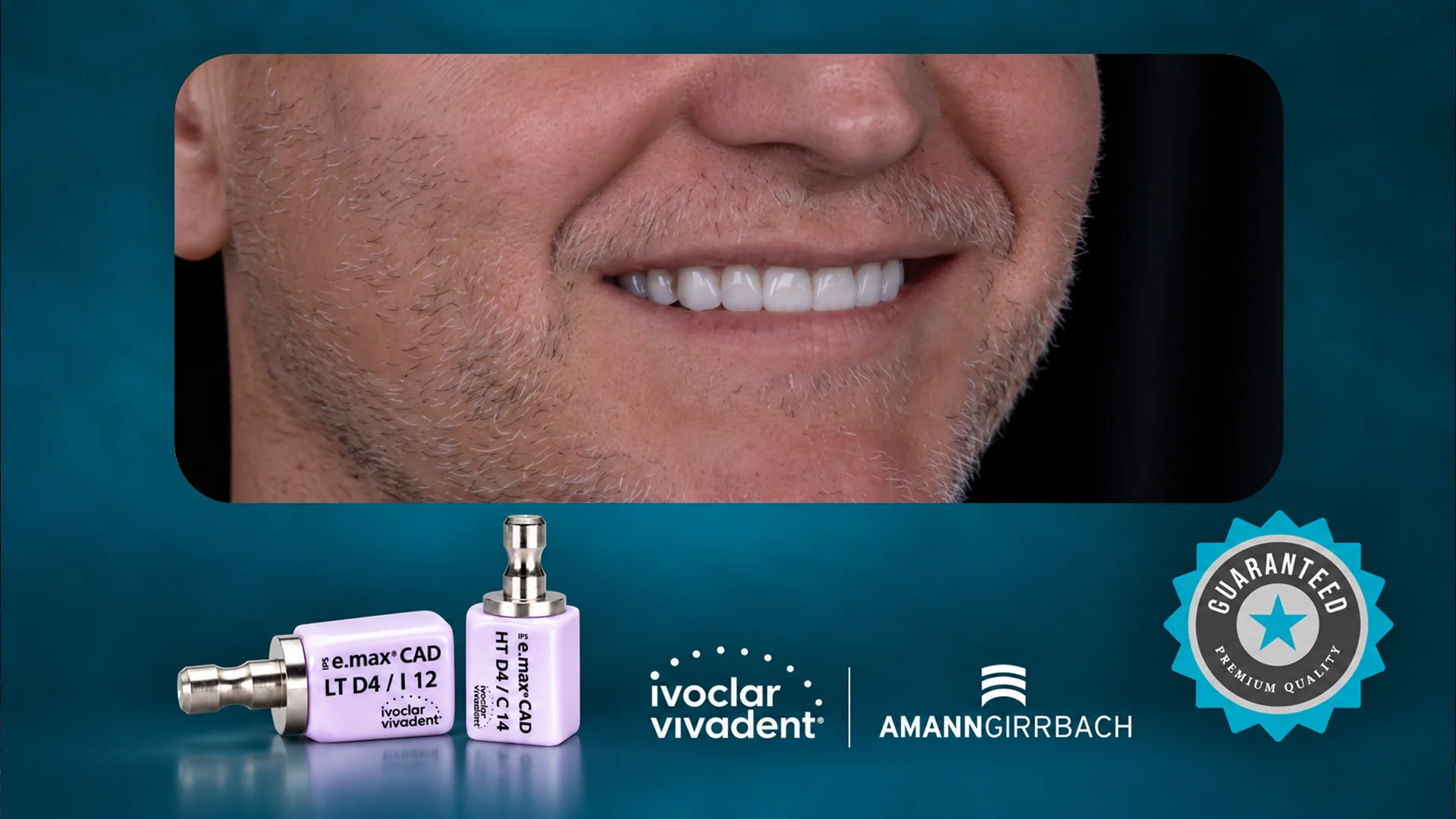
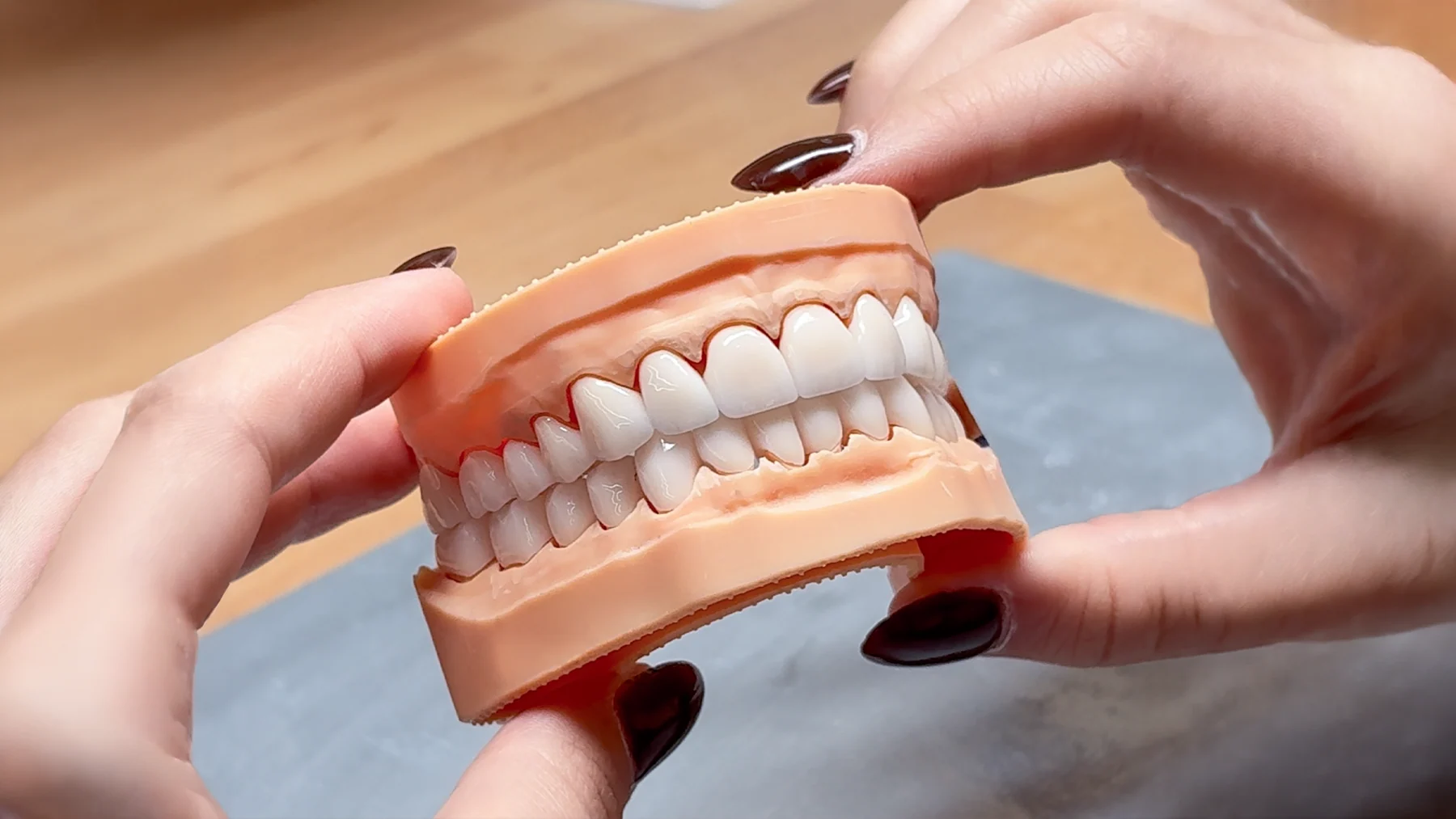
An E-max crown is a metal-free dental restoration produced from lithium disilicate glass-ceramic. It covers the visible part of a prepared tooth to restore its shape, appearance and function.
E-max crowns are known for their ability to combine structural support with controlled translucency. This allows the laboratory to recreate details such as tooth shade, brightness, surface texture and light reflection.
A crown may be recommended when a tooth requires more coverage than a veneer or filling can provide. Depending on the individual tooth, an E-max crown may be considered for:
- A tooth with a large or failing filling.
- A fractured, chipped or significantly worn tooth.
- A discoloured tooth that cannot be improved sufficiently with whitening.
- A tooth that has lost a significant amount of its natural structure.
- A selected root-canal-treated tooth.
- Replacement of an old or poorly fitting crown.
- Improvement of an irregular tooth shape.
- A selected single-tooth implant restoration.
- A visible tooth where close shade matching is particularly important.
E-max should not automatically be applied to every tooth. Its suitability depends on the position of the tooth, remaining dental tissue, underlying shade and forces produced by the patient’s bite.
Who Is Suitable for E-max Crowns?
E-max crowns may be considered for patients who need to restore a damaged or weakened tooth while maintaining a natural-looking appearance.
You may be suitable if you:
- Have a cracked, worn or heavily restored tooth.
- Need an old crown to be replaced.
- Have a front tooth with significant discolouration or structural damage.
- Have enough healthy tooth structure to support a bonded crown.
- Require full coverage following restorative treatment.
- Have healthy gums or gum disease that can first be brought under control.
- Can maintain effective daily oral hygiene.
- Have a stable bite or a bite that can be managed appropriately.
- Understand the need for long-term dental maintenance.
E-max may not be the first material recommended for every molar, long dental bridge or patient with very heavy bite forces. Monolithic zirconia or another restorative material may be considered in these situations.
Active decay, gum disease and infection should be treated before the final crown is placed. Root-canal treatment is not automatically required for an E-max crown; it is only performed when the condition of the tooth makes it clinically necessary.
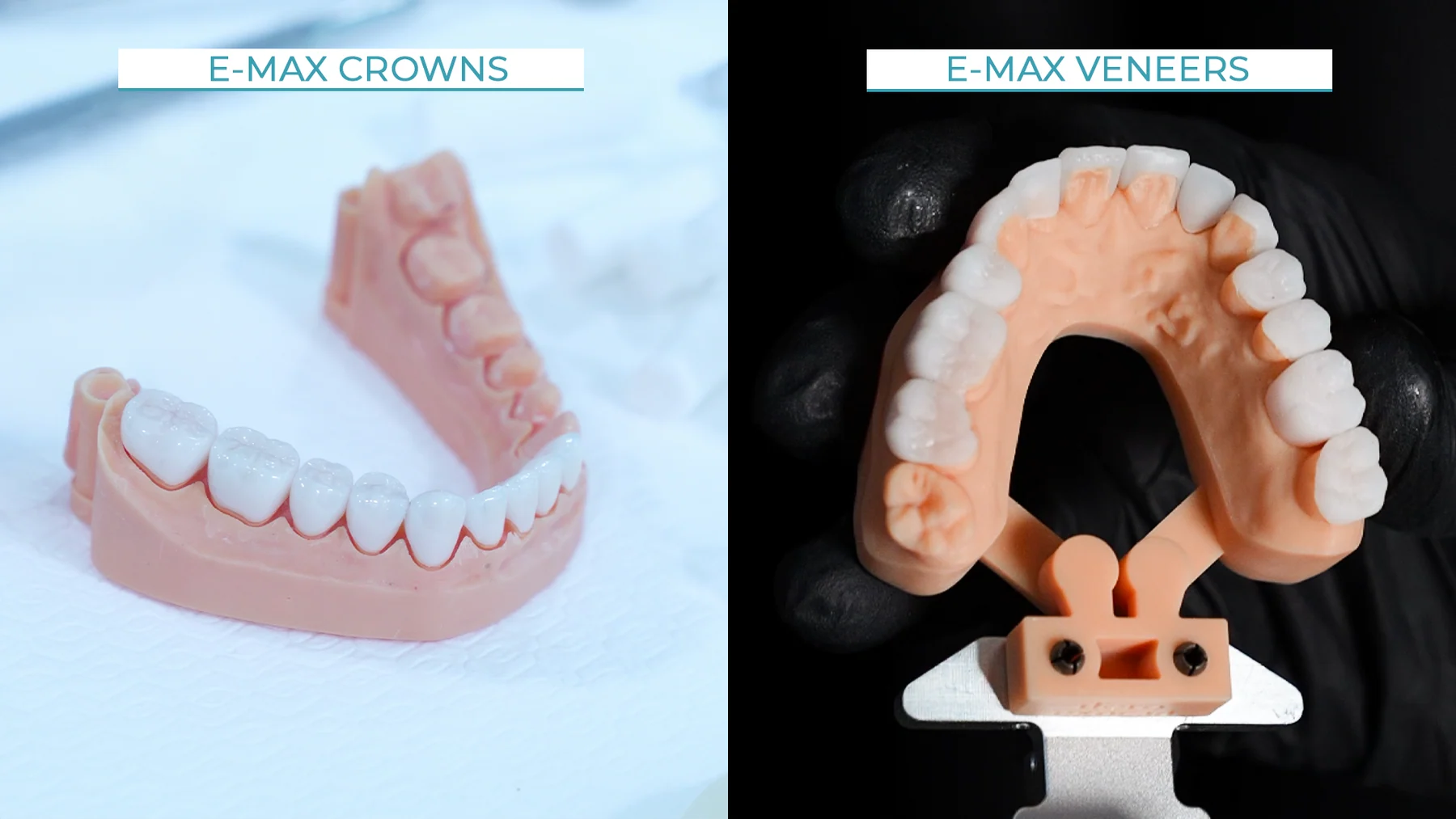
E-max Crowns vs E-max Veneers
E-max crowns and E-max veneers can be produced from the same lithium disilicate material, but they cover different parts of the tooth and have different clinical purposes.
E-MAX VENEER
An E-max veneer is a thin ceramic restoration bonded mainly to the front surface of a tooth. It is generally considered when the tooth is structurally healthy but requires an aesthetic change in shape, shade, length or proportion.
Veneers normally require less tooth preparation because they cover a more limited surface.
E-MAX CROWN
An E-max crown surrounds the visible part of the tooth. It provides more complete coverage and may be recommended when the tooth has lost more structure or requires broader restoration.
Preparing a tooth for a crown involves more surfaces than preparing it for a veneer. This is appropriate when the condition of the tooth benefits from full coverage, but a healthy tooth should not automatically receive a crown when a more conservative treatment would be sufficient.
HOW IS THE DECISION MADE?
The dentist first determines how much of the tooth needs to be restored. The material is then selected according to the remaining tooth structure, bite, underlying shade and aesthetic requirements.
At DIS Levent International, crowns and veneers are planned tooth by tooth rather than applying the same treatment to every visible tooth.
Explore E-max Veneers in Turkey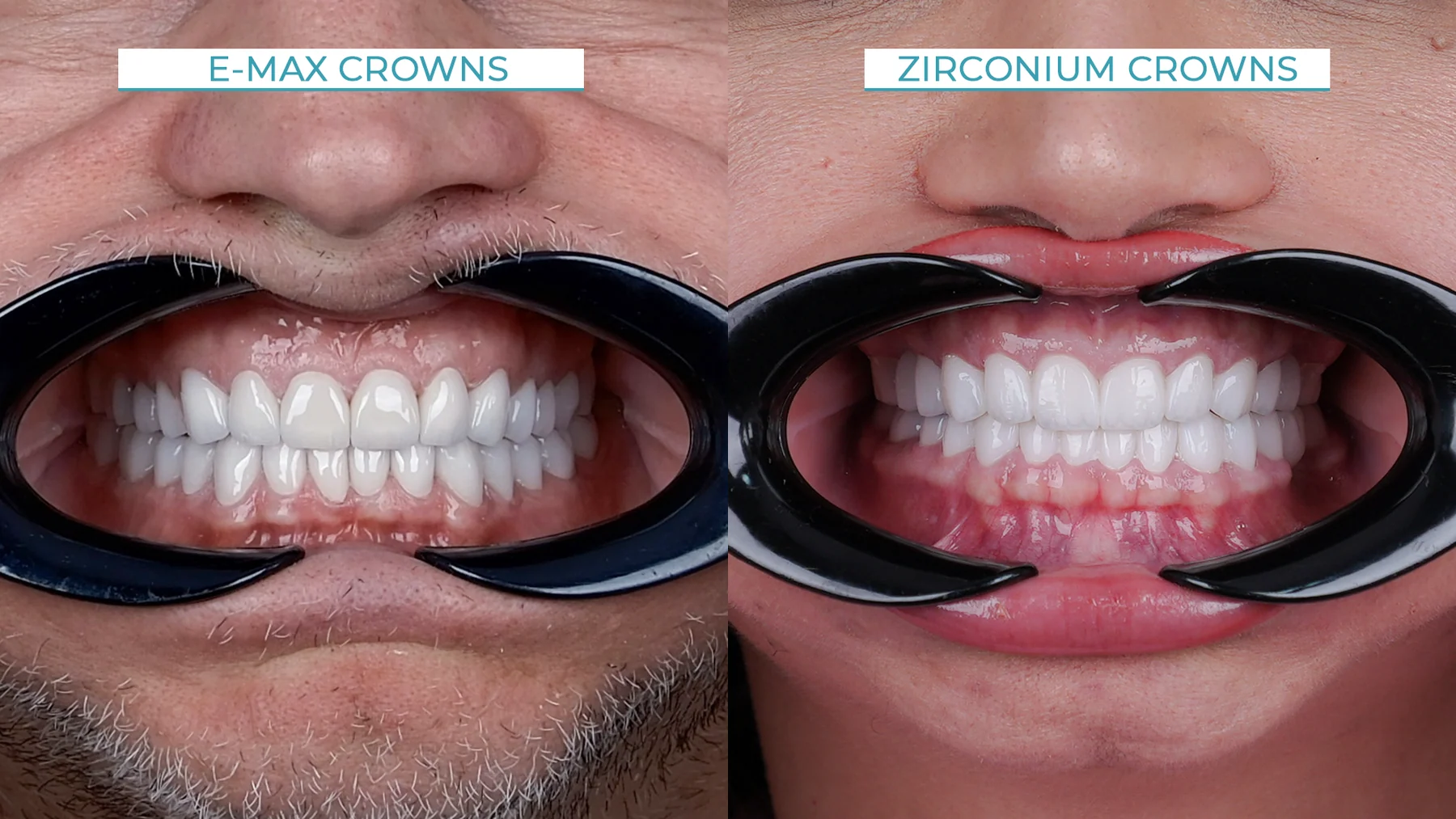
E-max Crowns vs Zirconium Crowns
E-max and zirconia are both metal-free dental ceramics. However, their optical and mechanical properties differ, which means they are not interchangeable in every case.
E-MAX CROWNS
E-max crowns are produced from lithium disilicate glass-ceramic. Their optical properties make them a commonly considered option for visible teeth where translucency, shade integration and natural light reflection are important.
They may also be used for selected back teeth when the bite, crown design and available tooth structure are suitable.
MONOLITHIC ZIRCONIA CROWNS
Monolithic zirconia crowns are produced from a strong ceramic material and are commonly considered for both front and back teeth. Their strength can make them particularly suitable for areas exposed to greater chewing forces and for patients who require more extensive restorative treatment.
Modern monolithic zirconia materials are available in different levels of translucency and can also provide natural-looking results when shade, surface texture and tooth shape are planned carefully.
WHICH MATERIAL IS BETTER?
Neither material is universally better. E-max may be preferred for selected aesthetic single-tooth restorations, while monolithic zirconia may be more appropriate for teeth exposed to heavier forces, certain dark underlying structures or multi-unit restorations.
A full smile plan may include E-max crowns, zirconia crowns and veneers together. The aim is to select the most suitable restoration for each tooth while maintaining a consistent overall appearance.
Compare Zirconium Crowns in TurkeyAre E-max Crowns Suitable for Front and Back Teeth?
E-MAX CROWNS FOR FRONT TEETH
E-max crowns may be considered for front teeth where the tooth requires full coverage and a natural transition between the restoration and neighbouring teeth is important.
Shade, translucency, internal characterisation and surface texture can be adjusted to help a single E-max crown blend with the surrounding natural teeth.
Front-tooth suitability also depends on the remaining tooth structure and underlying shade. If the tooth is very dark or contains a metal post, a material with greater masking ability may be required.
E-MAX CROWNS FOR BACK TEETH
E-max crowns can be used for selected premolars and molars. The decision depends on the position of the tooth, amount of remaining structure, crown thickness, bite forces and whether the patient grinds or clenches their teeth.
For back teeth exposed to heavier chewing forces, monolithic zirconia may sometimes be recommended instead. This does not mean E-max is unsuitable for every back tooth; it means the material should be selected after the functional demands of the individual tooth have been assessed.
At DIS Levent International, the choice is made according to the tooth rather than using one material throughout the mouth.

Personalised E-max Crowns-Not Standard “Turkey Teeth”
International patients are sometimes concerned that crown treatment in Turkey will result in teeth that appear excessively white, bulky or identical. We understand that a smile transformation should not make every patient look the same.
At DIS Levent International, tooth shape, shade, translucency, surface texture and edge details are planned according to your face, skin tone, lips, natural teeth and personal preferences. The goal is to produce a smile that looks balanced and individual rather than applying a standard “Turkey teeth” design.
Not every visible tooth automatically needs a crown. Depending on the condition of each tooth, the plan may combine E-max crowns with veneers, monolithic zirconia crowns, whitening, bonding or other treatments.
This tooth-by-tooth approach helps us select appropriate coverage and materials while maintaining consistency across the complete smile.
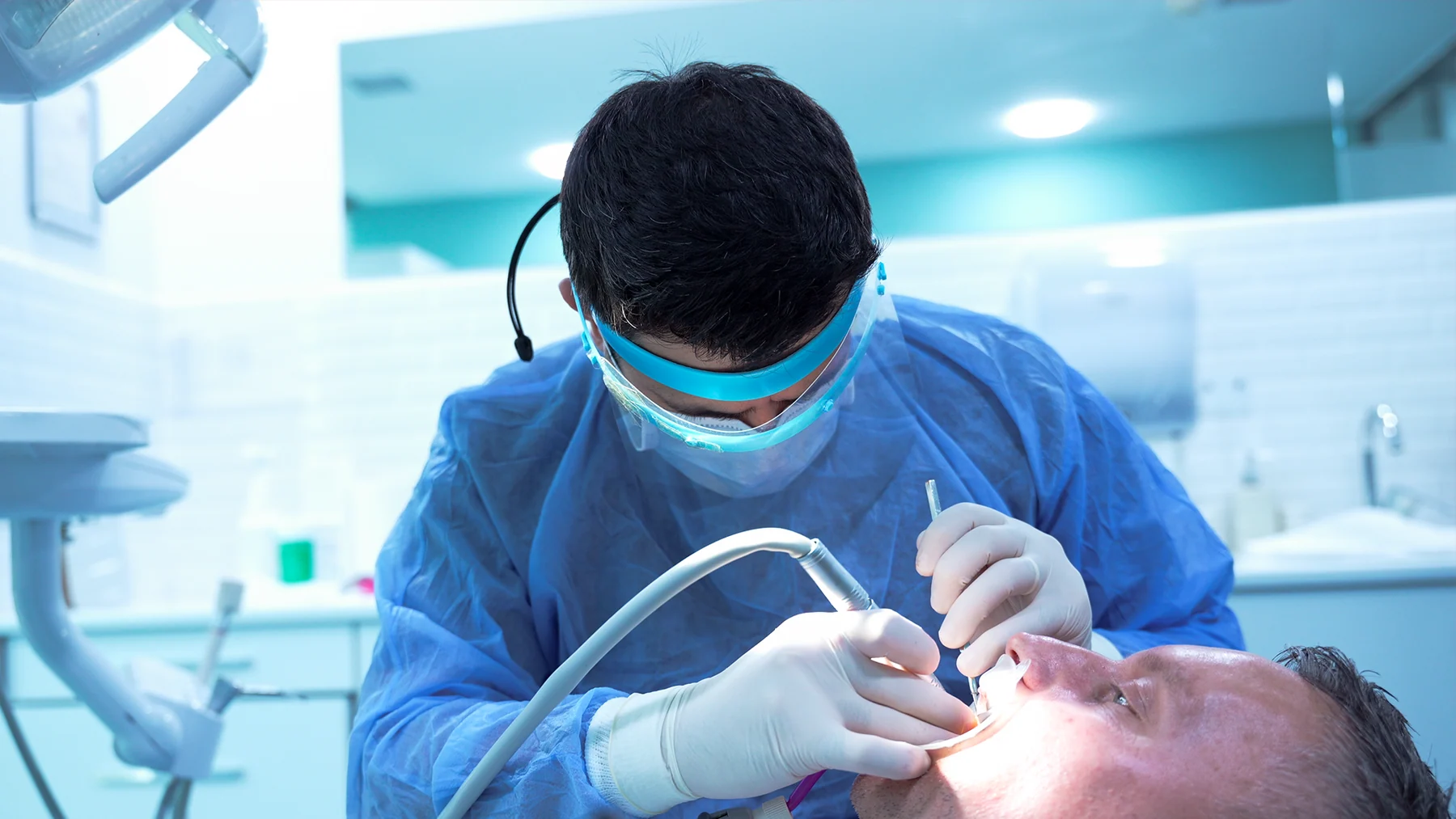
E-max Crown Procedure in Turkey: Step by Step
REMOTE CONSULTATION
Before travelling, share clear photographs of your smile and any recent dental X-rays or treatment reports you have available.
Our clinical team reviews your records and prepares a preliminary plan showing which teeth may require crowns and which materials may be suitable. The final decision is made after your clinical examination.
CLINICAL EXAMINATION
Your dentist examines your teeth, gums, existing restorations and bite. Dental X-rays or three-dimensional imaging may be used when clinically necessary.
The dentist checks for decay, cracks, infection, gum disease and the condition of existing fillings or crowns before confirming the treatment.
TREATMENT AND MATERIAL SELECTION
Each tooth is evaluated according to its position, remaining structure, underlying shade and functional load.
E-max, monolithic zirconia or another restorative option may be selected. The reason for the proposed material is explained before tooth preparation begins.
DIGITAL SMILE AND CROWN DESIGN
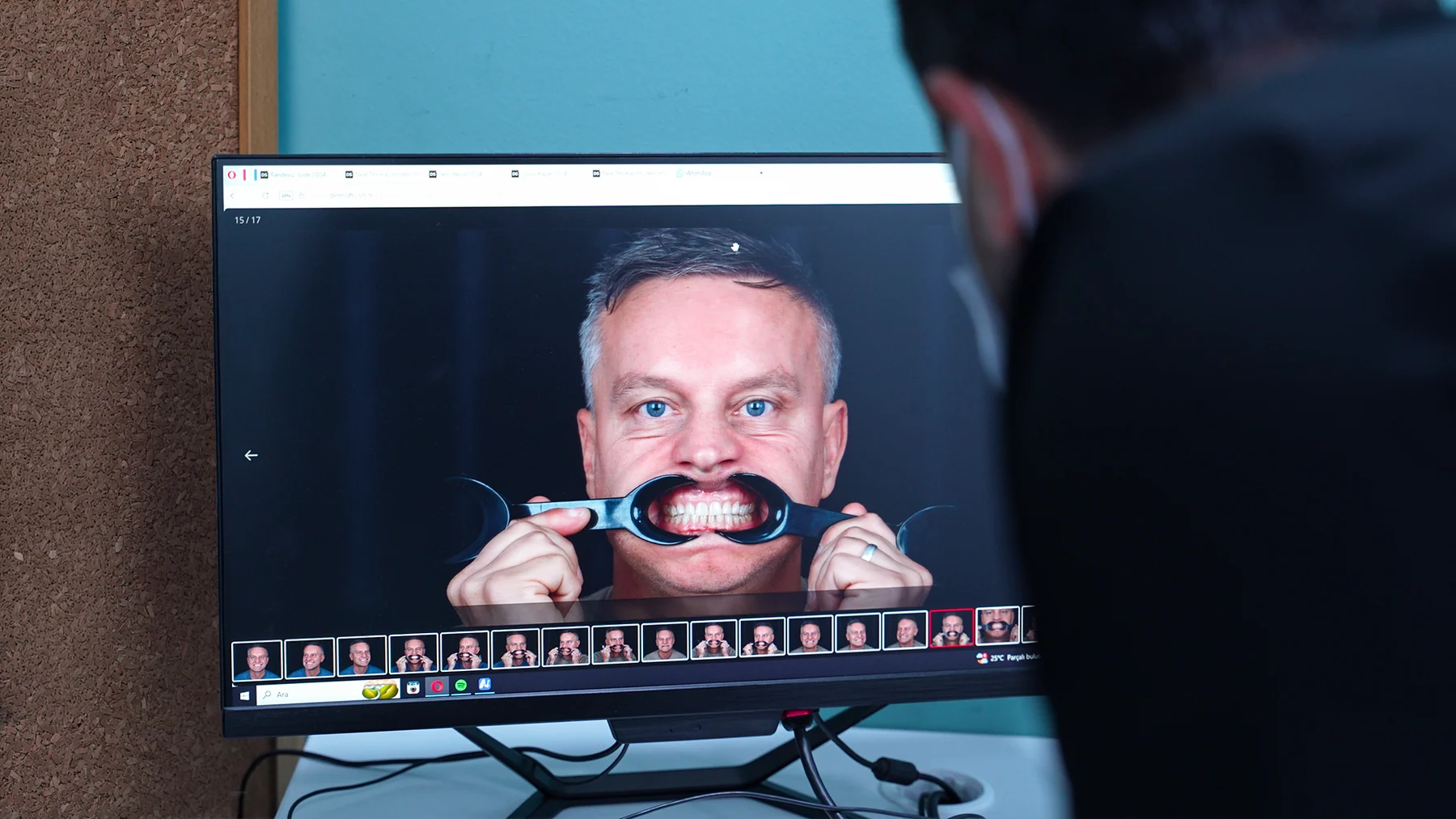
Digital scans, clinical photographs and bite records are taken. Tooth shape, length, shade and relationship with the surrounding teeth are planned.
For multiple visible crowns, the design is also considered in relation to your face, lips and smile line.
TOOTH PREPARATION
The tooth is shaped to create the space required for the crown and to establish a suitable fit.
Local anaesthesia is used when required to keep the procedure comfortable. The amount of preparation depends on the tooth’s existing shape, previous restorations and the selected crown design.
DIGITAL IMPRESSIONS AND TEMPORARY CROWNS
Detailed digital scans are taken after preparation and transferred to the dental laboratory.
A temporary crown or temporary smile is fitted to protect the prepared teeth and support appearance and basic function while the final restorations are produced.
LABORATORY PRODUCTION
The E-max crowns are produced according to the approved design. Shade, translucency, surface texture and other natural details are individually adjusted.
Communication between the dentist and laboratory team continues during this stage.
TRY-IN
The crowns are tried in so that their fit, margins, shade, shape and relationship with neighbouring teeth can be evaluated.
For multiple crowns, the dentist also reviews the smile line, tooth proportions, speech and overall harmony. Adjustments are discussed before final placement.
FINAL PLACEMENT
Once the crowns have been approved, the tooth and restoration surfaces are prepared according to the selected bonding protocol.
The crowns are fitted securely, excess cement is removed and the bite is checked carefully.
FINAL APPOINTMENT
The crowns, bite and gum relationship are reviewed, and aftercare instructions are provided.
E-max crown treatment is commonly completed within approximately five to seven working days. International patients can generally complete the process during one planned visit without needing to remain in Türkiye for an extended period.
If gum treatment, root-canal treatment or another preliminary procedure is required, the overall schedule may be longer.
How Long Does E-max Crown Treatment Take in Turkey?
E-max crown treatment usually takes approximately five to seven working days. The exact schedule depends on the number of crowns, condition of the teeth and gums, complexity of the design and whether additional treatment is required.
A typical treatment journey includes:
FIRST APPOINTMENT
Clinical examination, dental imaging, digital scans, photographs and material selection.
TOOTH PREPARATION
The teeth are prepared, detailed digital impressions are taken and temporary crowns are fitted.
LABORATORY STAGE
The E-max crowns are produced and individually characterised. The dentist and laboratory team communicate regarding shade, form and fit.
TRY-IN AND ADJUSTMENTS
The crowns are evaluated in the mouth before final placement. Necessary adjustments can be made to shade, shape, contacts and bite.
FINAL PLACEMENT
The approved crowns are fitted, the bite is checked and maintenance instructions are provided.
Most international patients can complete these stages during a single visit to Istanbul. Your coordinator will confirm the recommended length of stay before you arrange your return flight.
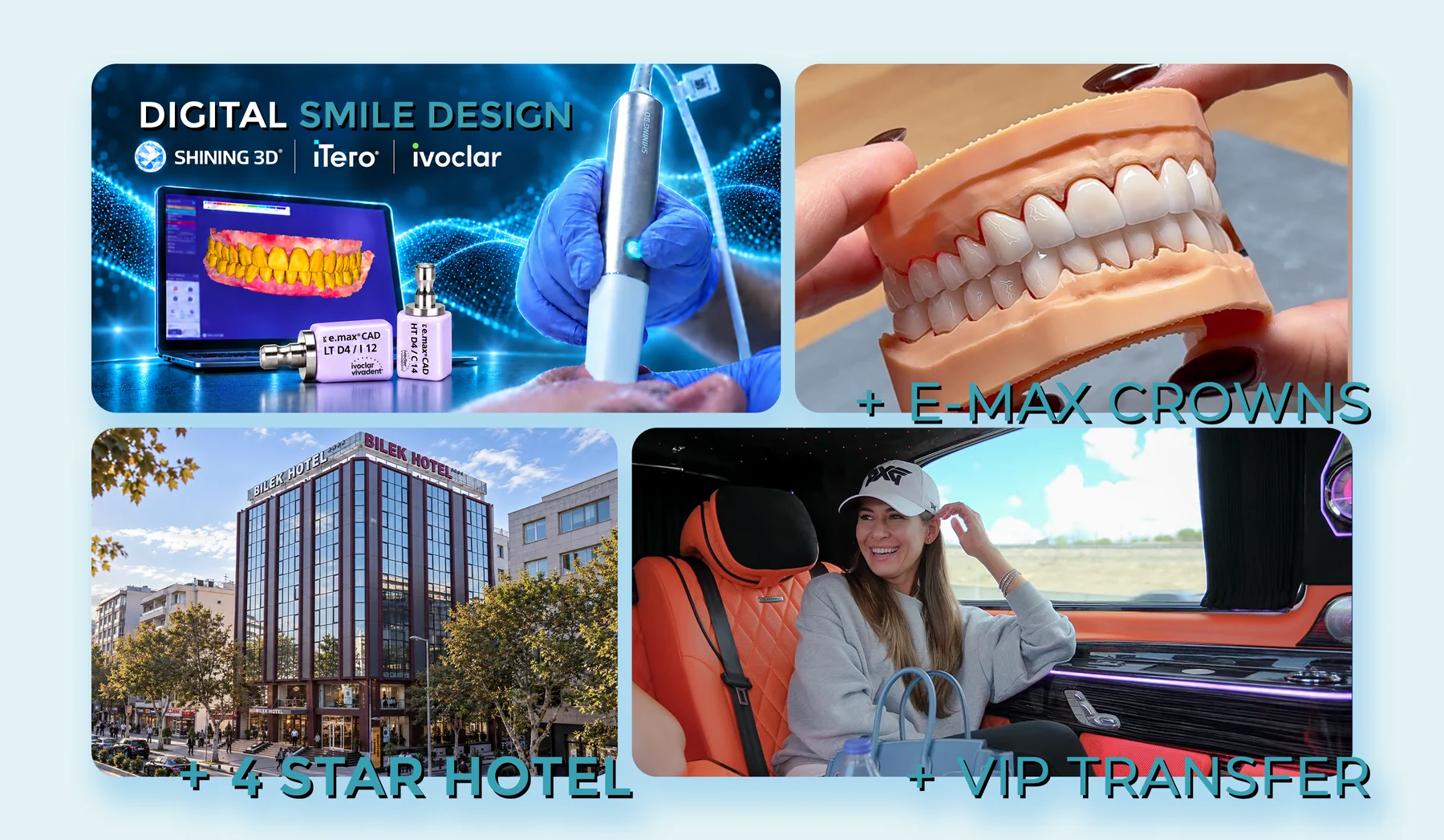
How Much Do E-max Crowns Cost in Turkey?
The cost of E-max crowns in Turkey depends on the number of teeth treated, the condition of the underlying teeth and the complexity of the restorative and laboratory work.
Factors affecting the final cost may include:
- The number of E-max crowns.
- Whether treatment involves one tooth or a broader smile restoration.
- Existing fillings, crowns or veneers.
- The amount of healthy tooth structure remaining.
- Replacement of old restorations.
- Root-canal treatment when clinically required.
- Gum treatment or gum contouring.
- Core build-ups or posts required before crown placement.
- Temporary crowns.
- Laboratory design and individual characterisation.
- Accommodation, transfers or other travel services included in the plan.
Patients should compare more than the advertised price per crown. Examination, temporary crowns, material traceability, laboratory production, try-in, bite adjustment and aftercare should all be considered.
TRANSPARENT TREATMENT PLAN
You receive a preliminary treatment plan and itemised quotation before travelling. The plan explains the proposed restoration and material for each tooth, along with additional treatments that could reasonably become necessary.
The final plan and cost are confirmed following your clinical examination in Istanbul. When the records provided accurately represent your current dental condition, the confirmed price will normally remain close to the preliminary quotation.
If the examination identifies an unexpected requirement, the reason, alternatives and effect on the cost are explained before treatment continues.
Benefits of E-max Crowns
NATURAL OPTICAL PROPERTIES
Lithium disilicate glass-ceramic is available in different levels of translucency and opacity. This gives the dentist and laboratory control over how the crown reflects and transmits light.
METAL-FREE RESTORATION
E-max crowns do not require a metal framework. This supports their optical properties and avoids a metal-related grey appearance at the edge of the crown.
PERSONALISED SHADE AND TEXTURE
Shade, brightness, translucency, surface texture and tooth anatomy can be adjusted according to the neighbouring teeth and desired result.
FULL TOOTH COVERAGE
An E-max crown covers the visible part of the prepared tooth. This can be suitable when more comprehensive restoration is required than a filling, bonding or veneer can provide.
DIGITAL AND LABORATORY OPTIONS
E-max restorations can be produced through digital CAD/CAM or laboratory-based workflows. The selected technique depends on the individual restoration and desired characterisation.
USE IN SELECTED FRONT AND BACK TEETH
E-max crowns can be considered for both visible front teeth and selected back teeth when the restorative space and functional conditions are appropriate.
E-max Crown Aftercare and Maintenance
E-max crowns should be cared for in the same way as natural teeth. The ceramic cannot develop decay, but the natural tooth around and beneath the crown remains vulnerable to plaque and dental disease.
Recommended care includes:
- Brushing twice daily with a soft toothbrush.
- Using a non-abrasive fluoride toothpaste.
- Cleaning between the teeth every day.
- Paying particular attention to the crown margins.
- Attending regular dental examinations and professional cleaning.
- Avoiding chewing ice and other very hard objects.
- Avoiding opening packaging with your teeth.
- Contacting a dentist if the crown feels loose or the bite feels uneven.
- Having persistent sensitivity or gum irritation assessed.
NIGHT GUARD FOR GRINDING OR CLENCHING
Grinding and clenching can create excessive forces on natural teeth and ceramic restorations.
If signs of bruxism are identified, a protective night guard may be recommended and provided by our clinic. The guard is made after the final crowns have been placed so that it fits the new tooth positions accurately and helps protect the restorations from excessive night-time forces.
E-max Crown Risks and Important Considerations
E-max crowns are a long-term restorative treatment and should be planned after the teeth, gums and bite have been evaluated.
Important considerations include:
- The tooth must be prepared to create space for the crown.
- Crown preparation cannot be reversed.
- Temporary sensitivity may occur after treatment.
- A crown can chip, fracture, loosen or require replacement.
- The natural tooth can still develop decay around the crown margin.
- Gum inflammation can occur if plaque collects around the restoration.
- Heavy grinding or an unstable bite can increase mechanical risk.
- A heavily discoloured tooth may require additional masking.
- Some teeth may require root-canal treatment before or after crown placement.
- Restorative components may require maintenance over time.
These considerations do not mean that E-max crowns are unsuitable for most patients. They demonstrate why material selection, crown design, bonding and bite evaluation must be personalised.
No dental crown can be guaranteed to last for life. Long-term performance depends on the health of the underlying tooth, fit of the restoration, bite forces, oral hygiene and regular professional care.
Why Do International Patients Choose E-max Crowns in Turkey?
International patients may choose E-max crowns in Turkey because private restorative and aesthetic dental treatment can be more accessible than comparable treatment in the UK, Europe or the United States.
Lower operating and laboratory costs can reduce the overall price, but patients should not select a clinic according to cost alone.
Other reasons patients consider Istanbul include:
- Dentists experienced in aesthetic and restorative treatments.
- Digital scanning and dental laboratory technology.
- Coordinated treatment schedules for international patients.
- Personalised shade and smile planning.
- Multidisciplinary dental services in one clinic.
- Direct international flight connections.
- Multilingual patient coordinators and interpreters.
- Accommodation and transfer support.
- The possibility of completing treatment in approximately one week.
The quality of crown treatment varies between clinics in every country. Patients should check the treating dentist, material used, tooth-preparation plan, temporary crowns, laboratory process and aftercare arrangements before travelling.
Why Choose DIS Levent International for E-max Crowns in Istanbul?
Successful crown treatment depends on more than choosing a ceramic material. The health of the tooth, amount of remaining structure, crown preparation, bite and laboratory design must all be considered together.
At DIS Levent International, your treatment is coordinated from the first remote assessment to the final crown placement and aftercare.
TOOTH-BY-TOOTH MATERIAL SELECTION
We do not apply E-max or zirconia to every tooth automatically. Each tooth is assessed according to its position, remaining structure, underlying shade and functional requirements.
Your plan may combine E-max crowns, monolithic zirconia crowns, veneers and other treatments. The reason for each proposed restoration is explained before treatment begins.
PERSONALISED CROWN AND SMILE DESIGN
Tooth shape, shade, translucency, surface texture and edge character are designed according to your face, lips, skin tone, natural teeth and personal preferences.
This approach helps avoid an overly uniform or artificial result and allows the restoration to be adapted to the individual patient.
DIGITAL DENTISTRY
Digital scans and clinical photographs provide detailed information about your teeth, gums and bite. These records support communication between the dentist and dental laboratory.
Digital planning also allows the shape, proportions and relationship of multiple crowns to be reviewed before the final restorations are completed.
OUR DENTAL LABORATORY
Technology, precision and craftsmanship come together to create personalised dental restorations planned for natural aesthetics, comfortable function and an accurate fit.
Direct communication between the dentist and laboratory team allows the shade, translucency, surface texture and fit of the crowns to be reviewed throughout production.
MULTIDISCIPLINARY DENTAL TEAM
Crown treatment may involve additional gum care, root-canal treatment, implant dentistry or bite assessment.
While some clinics may refer patients to different centres for these services, DIS Levent International provides access to professionals working across restorative dentistry, aesthetic dentistry, endodontics, periodontology, implant dentistry and orthodontics within the same clinic.
This allows additional requirements to be assessed without separating the different stages of your treatment.
TRANSPARENT TREATMENT PLAN
Before travelling, you receive a preliminary plan and itemised quotation explaining the proposed treatment for each tooth.
Possible additional procedures are discussed in advance. The final plan is confirmed after your clinical examination, and any necessary changes are explained before treatment proceeds.
INTERNATIONAL PATIENT SUPPORT
A member of our international patient team remains available throughout your treatment journey.
Our English-speaking doctors and multilingual interpreters help you communicate your needs, concerns and aesthetic preferences clearly. You can discuss details such as material choice, crown shade and tooth shape without feeling that important information is being lost in translation.
Our team also remains available after you return home and directs clinical questions to the relevant dentist when required.
E-max Crowns Before and After Results
Explore before-and-after cases from patients who received E-max crowns and other personalised restorative treatments at DIS Levent International.
Every patient begins with a different tooth condition, existing restorations, bite and aesthetic requirement. Photographs represent individual outcomes and do not guarantee that another patient will receive the same result.
During your consultation, the clinical team can show you cases relevant to the number, position and condition of the teeth you would like to restore.
Frequently Asked Questions About E-max Crowns in Turkey
What are E-max crowns made from?+
E-max crowns are produced from lithium disilicate glass-ceramic. This metal-free material is available in different levels of translucency and opacity, allowing the crown to be adapted to the underlying tooth and surrounding smile.
Are E-max crowns the same as porcelain crowns?+
E-max crowns are a type of all-ceramic or porcelain crown. The term porcelain crown is broader and may describe crowns made from several different ceramic systems. E-max identifies a specific material family.
Are E-max crowns suitable for front teeth?+
Yes, E-max crowns may be used for selected front teeth that require full coverage. Their optical properties allow shade, translucency and surface details to be adjusted to help the crown blend with neighbouring natural teeth.
The underlying tooth shade and amount of remaining structure must also be considered.
Are E-max crowns suitable for back teeth?+
E-max crowns can be used for selected premolars and molars. Suitability depends on the tooth’s position, available restorative space, remaining structure, bite forces and whether the patient grinds or clenches.
Monolithic zirconia may be recommended for some back teeth exposed to higher forces. The material is selected after the individual tooth and bite have been assessed.
Are E-max crowns stronger than zirconium crowns?+
E-max and zirconia have different material properties. Zirconia generally offers greater strength and may be preferred for areas exposed to heavier functional forces.
E-max provides different optical characteristics and may be selected for aesthetic single-tooth restorations. The most suitable material depends on the individual clinical situation.
What is the difference between an E-max crown and an E-max veneer?+
An E-max veneer covers mainly the front surface of the tooth and is used primarily for conservative aesthetic changes. An E-max crown surrounds the visible part of the tooth and is used when greater coverage is required.
Both may be produced from lithium disilicate, but they require different preparation and have different clinical indications.
How much tooth is removed for an E-max crown?+
The amount depends on the existing shape of the tooth, previous fillings and the space needed for the crown. Because a crown surrounds the tooth, preparation involves more surfaces than veneer treatment.
Your dentist should explain why full coverage is recommended before preparation begins.
Do I need root-canal treatment before an E-max crown?+
Not routinely. Many teeth receive crowns without root-canal treatment.
Root-canal treatment is only recommended when the tooth has infection, irreversible nerve inflammation or another clinical condition that requires it. It should not be performed automatically simply because a crown is planned.
Can an E-max crown be placed on a dental implant?+
E-max may be considered for selected single implant crowns, depending on implant position, bite forces, restorative design and the supporting implant component.
Your implant dentist and restorative dentist determine whether E-max, zirconia or another material is more appropriate.
How long does E-max crown treatment take in Turkey?+
Treatment is commonly completed within approximately five to seven working days. This includes examination, preparation, temporary crowns, laboratory production, try-in and final placement.
Additional treatments may extend the schedule.
How much do E-max crowns cost in Turkey?+
The cost depends on the number of crowns, condition of the underlying teeth, required preparatory treatment and complexity of the laboratory work.
DIS Levent International provides an itemised preliminary quotation after reviewing your photographs and available dental records.
How many E-max crowns do I need?+
The number depends on how many teeth require full coverage. A patient may need one E-max crown to restore a damaged front tooth or several different restorations as part of a broader smile treatment.
Healthy teeth should not automatically receive crowns to reach a standard number. Your plan should identify the proposed treatment and material for every tooth.
Can E-max crowns be used for a full smile makeover?+
They may form part of a full smile makeover, but it is not always appropriate to use E-max crowns on every tooth.
A personalised plan may combine E-max crowns, zirconia crowns, veneers, whitening and bonding according to the condition and requirements of each tooth.
Do E-max crowns stain?+
The ceramic surface is more resistant to staining than natural enamel. However, plaque and superficial deposits can still collect around crown margins.
Regular brushing, interdental cleaning and professional maintenance help preserve the appearance of the crown and the health of the surrounding gum.
How long do E-max crowns last?+
E-max crowns are designed for long-term use, but their lifespan varies. The condition of the underlying tooth, crown fit, bite forces, grinding, oral hygiene and regular maintenance all influence longevity.
A crown may eventually require repair, re-bonding or replacement.
Can an E-max crown chip or break?+
Like any ceramic restoration, an E-max crown can be damaged by excessive forces, trauma, grinding or biting very hard objects.
Correct material selection, careful bite adjustment and a protective night guard when indicated can help reduce risk.
Is E-max crown treatment painful?+
Local anaesthesia can be used during tooth preparation, so patients should not experience procedural pain.
Some temporary sensitivity may occur afterwards. Persistent pain, increasing sensitivity or a bite that feels uneven should be assessed by a dentist.
Will I receive temporary crowns?+
Yes, temporary crowns are generally provided while the final restorations are being produced. They protect the prepared teeth and support appearance and basic function.
Temporary crowns are not as strong as final restorations, so dietary and cleaning instructions should be followed carefully.